
Think You Might Have Termites? What to Do?—and What to Avoid?
Finding insects or unusual damage around your home can be unsettling. You do not need to identify the species yourself before asking for help.
If you suspect termites, leave the area undisturbed, avoid spraying and arrange a professional inspection. Make a note of what you noticed and where you found it. The next step is an assessment—not a rushed treatment decision.
First, leave the evidence in place
Resist the urge to spray the insects, scrape away a mud tube or pull apart affected timber. Victoria’s Building and Plumbing Commission advises against surface sprays and removing affected building materials because disturbance can interfere with effective treatment.
If you have already sprayed or disturbed the area, tell the inspector what happened. That information helps them understand the conditions they are assessing.
Record what you can see without disturbing it
Take a photograph from a safe, accessible position. Record the room or outside location and when you first noticed the issue. Do not open walls, move suspect timber or enter a roof space or subfloor to obtain a better picture.
When you contact a pest professional, useful details include:
Whether the discovery is inside the house, against the building or in the garden.
Whether insects are visible, or you have noticed damage only.
Any previous termite reports, treatments or management-system records.
Access restrictions that may affect an inspection.
A photo is useful background information; it does not replace a property inspection.
Signs worth having checked
Mud-like tubes on masonry and unexpectedly weakened timber warrant assessment. These are possible warning signs, not a diagnosis. The Commission notes that termite activity can be concealed and difficult to detect. BPC homeowner guidance
Shed wings can also be a clue. Victoria’s Department of Health explains that winged reproductive termites discard their wings after flight. A photograph of wings alone does not establish where a colony is located or whether the building is affected. Victorian Department of Health
Avoid using an online image comparison to decide that your home is either infested or clear. Ask for identification and an assessment of the property.
What should you ask when arranging an inspection?
Before booking, ask what the inspection covers, what access is required, what reporting you will receive and how inaccessible areas are recorded.
An inspection and a treatment are different services. The assessment should guide the discussion about any further investigation, management or treatment. Ask for the proposed scope, costs and conditions in writing before agreeing to that work.
You can read more about SureGuard’s termite inspections across Geelong, Golden Plains and the Surf Coast.
Found termites in a stump or garden timber?
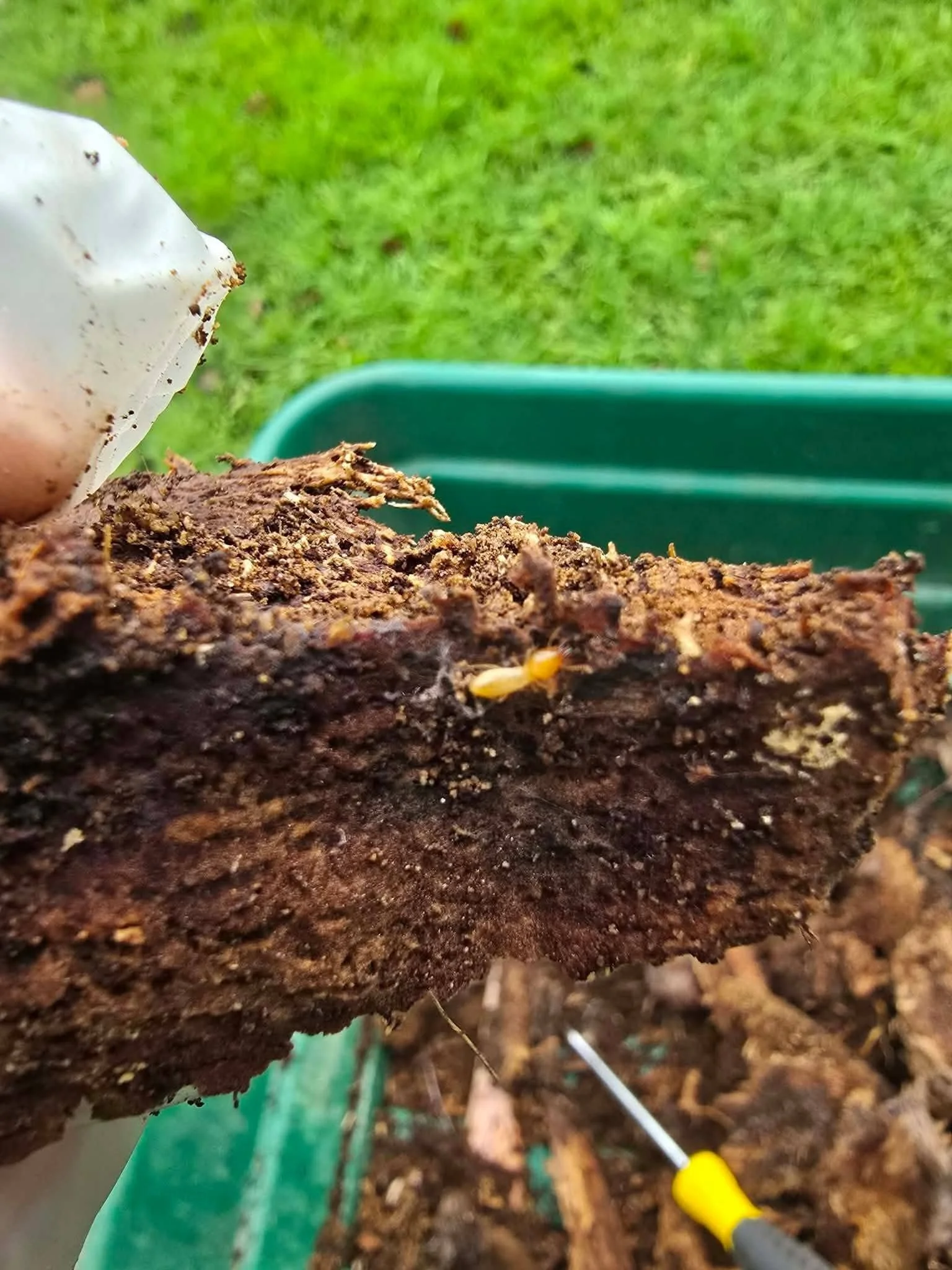
Explain the location when you call. Garden activity and confirmed activity within a building are different findings; neither should be assumed from the other.
The Department of Health identifies moisture and timber contact with soil as relevant risk factors. Once the immediate concern has been assessed, ask about drainage, leaks, stored timber and conditions around the building. These changes support risk reduction; they do not establish whether termites are currently present. Victorian Department of Health
Arrange the next step with SureGuard
Not sure what you have found? Tell us what you can see, where it is and your suburb. We will discuss the appropriate next step and arrange an inspection quote.
Request a termite inspection or call SureGuard on 0468 485 122.